

Wednesday, December 22, 2010
New Website & Blog
The new website & blog can be found at www.scottmartinphotography.ca or use your QR code scanner to go directly to the new site. Have a wonderful Christmas!

Tuesday, November 30, 2010
Friday, November 26, 2010
New Website and Blog
I'm pleased to announce that the new SMP website and blog is now operational. Please drop by and have a look. I think you will enjoy the new layout that seamlessly combines the blog and website.
Tuesday, November 2, 2010
Major Website & Blog Changes Coming
After much investigation, I’ve decided to make a radical change to the website and blog in order to make them function more seamlessly together providing a more professional web presence. This change will take place over the next few weeks however as with all websites it will remain a work in progress as we continually strive to make it better. Although the appearance of the website will change dramatically, the ‘back end’ will change even more as we move to a new web hosting company, Bluehost, and re-write the website and blog using WordPress which is a big change from our old template driven flash site. Although the flash site had many advantages and was easy to set up, WordPress offers far more flexibility and the opportunity to build a comprehensive website to best showcase our photography. I stand at the bottom of a huge learning curve, but it is an exciting one. Please stick with us as we transition to the new site and any suggestions or comments you may have are more than welcome.
Sunday, October 31, 2010
The Last Images from Washington
Its been a long time processing some of the hundreds....OK thousands... of shots taken in Washington this summer. I hope you have enjoyed them and also learned a little about the rich history that accompanies these images.
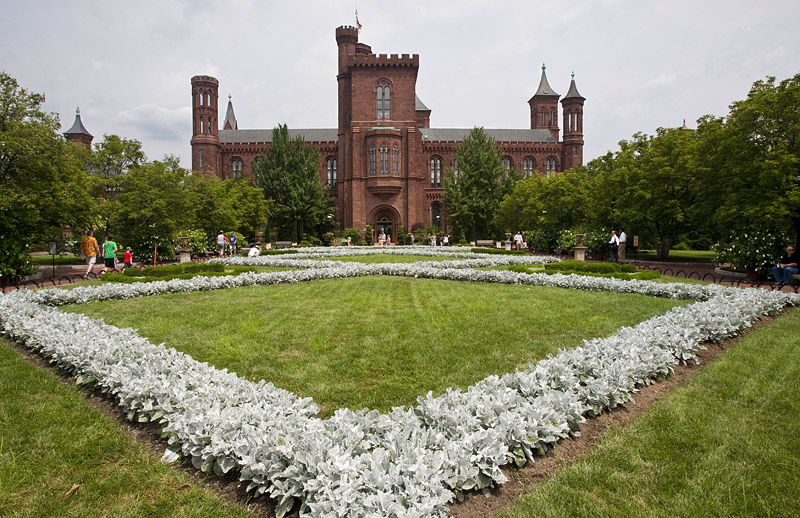
The Smithsonian Castle. Did you know that the Smithsonian Institution is the world's largest museum complex & research organization, consisting of a national zoo, nineteen museums and nine research centres? In 1826 James Smithson (British Scientist) left his estate to his nephew, who then died in 1836 leaving no heirs. According to Smithson's will, should the nephew die without heirs the entire estate was to then be given to the United States to found the Smithsonian Institution.....and the rest, they say, is history.


Martin Luther King Jr. gave his "I Have a Dream" speech from the steps of the Lincoln Memorial on August 28, 1963. The speech became the defining moment of the American Civil Rights Movement when it was delivered to over 200,000 supporters who had gathered for the March On Washington for Jobs & Freedom Rally. The speech lasted only seventeen minutes and has been regarded by scholars as the top American speech of the twentieth century.


The Smithsonian Castle. Did you know that the Smithsonian Institution is the world's largest museum complex & research organization, consisting of a national zoo, nineteen museums and nine research centres? In 1826 James Smithson (British Scientist) left his estate to his nephew, who then died in 1836 leaving no heirs. According to Smithson's will, should the nephew die without heirs the entire estate was to then be given to the United States to found the Smithsonian Institution.....and the rest, they say, is history.

The National Gallery of Art - East Building

This shot is one of my favourites, even though taken looking directly into the sun makes for harsh light. Taken at 16mm with the camera about 18" off the ground, this shot is virtually uncropped. The Washington Monument in the BG is just over a mile away and getting the shot with no people on the walkway was a challenge.
Martin Luther King Jr. gave his "I Have a Dream" speech from the steps of the Lincoln Memorial on August 28, 1963. The speech became the defining moment of the American Civil Rights Movement when it was delivered to over 200,000 supporters who had gathered for the March On Washington for Jobs & Freedom Rally. The speech lasted only seventeen minutes and has been regarded by scholars as the top American speech of the twentieth century.

And finally a few more from the Washington National Cathedral

The crucifix in this image is life size (not the door on the right for reference).


I rarely do much post processing other my normal work flow, however I did take some liberty with this last image in order to keep the shot. Let me know what you think.

Wednesday, October 27, 2010
Washington National Cathedral
The purpose of the cathedral was to be a "great church with a national purpose, equally open to all" and it has been the home to many memorial services, funerals and religious ceremonies. Martin Luther King Jr. preached his last Sunday sermon from the Washington National Cathedral in 1963 shortly before his assassination. Billy Graham preached there at the memorial service service held after the 9/11 tragedy. The cathedral was begun under the auspices of the Protestant Episcopal Church however defines its mission as ecumenical.
Construction of the cathedral began in 1907 and was completed in 1990 using only medieval construction techniques in keeping with its fourteenth century English Gothic design. Most likely it will be the last Gothic building attempted anywhere in the world as modern design and construction techniques make buildings like the cathedral prohibitively expensive and impractical to build (and they take too long to build - eighty three years in this case).
It is difficult if not impossible to convey the sheer size of the cathedral and this shot of the main church entrance doesn't do it justice even with the people on the entrance steps of the camera right doors.


Construction of the cathedral began in 1907 and was completed in 1990 using only medieval construction techniques in keeping with its fourteenth century English Gothic design. Most likely it will be the last Gothic building attempted anywhere in the world as modern design and construction techniques make buildings like the cathedral prohibitively expensive and impractical to build (and they take too long to build - eighty three years in this case).
It is difficult if not impossible to convey the sheer size of the cathedral and this shot of the main church entrance doesn't do it justice even with the people on the entrance steps of the camera right doors.

The "small" cross above the table is over six feet in height.
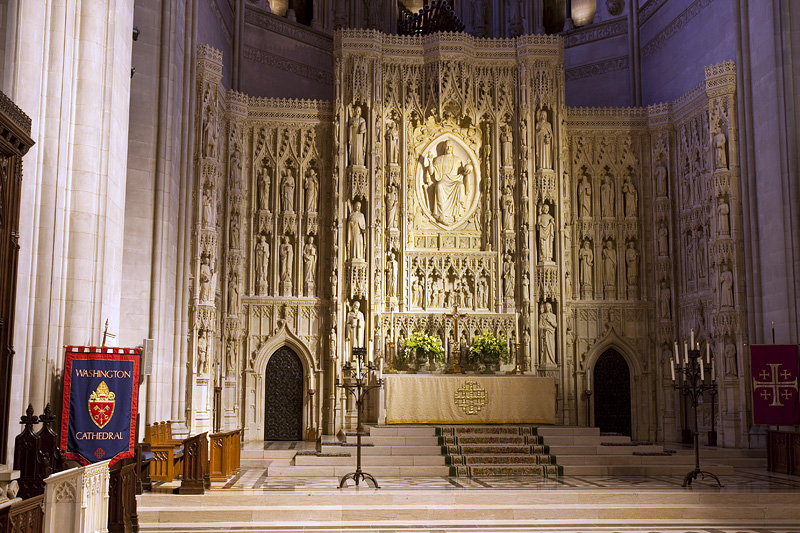

This image below is a thirty second time exposure of a wooden crucifix located high above the main pulpit in the cathedral. You can the see the same crucifix in the image above for some perspective.

The main pulpit.

President Woodrow Wilson lies in a tomb at the midpoint of the main cathedral.

Looking towards the main pulpit from inside the main entrance doors.
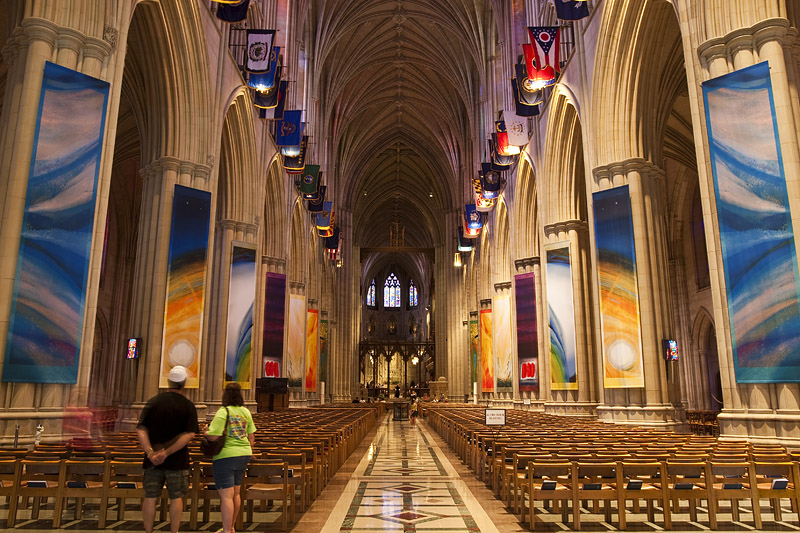
Looking back towards the Rose Window and main entrance from the midpoint of the cathedral.

It was a privilege to photograph inside the cathedral and I was most grateful for being able to use a tripod inside the church (which is normally not allowed). The lighting inside the building is less than ideal and most of the images shown were taken at shutter speeds of more than two seconds, the longest being thirty seconds (ISO 100). We took hundreds of images using three lenses (16-35, 24-105 & 70-200).
Wednesday, October 20, 2010
Tomb of the Unknowns - Arlington National Cemetery
The Tomb of the Unknowns, often referred to as the Tomb of the Unknown Soldier, is attached to the south side of the Memorial Amphitheater in Arlington National Cemetery. It has been guarded continuously 24/7/365 since July 2, 1937 by the Tomb Guards, a platoon within the 3rd US Infantry Division. The changing of the guard at the Tomb of the Unknowns is an honour to observe and demonstrates the highest respect paid to even the unknown servicemen who gave their lives for their country.
The WW I unknown soldier was randomly selected by Sargent Edward Younger from four unknown servicemen exhumed from cemeteries in France on October 24, 1921. The selected soldier was brought to America where he lay in state in the Capitol until being re-interred in the plaza of the Memorial Amphitheater on November 11, 1921. The sarcophagus seen in these pictures is located above the WW I Unknown Soldier. There are three crypts immediately west of the sarcophagus, marked by three white marble slabs. The outside crypts contain the bodies of an unknown soldier from WW II and the Korean War while the central crypt formerly contained the body of an unknown soldier from the Vietnam War. The then unknown Vietnam soldier was exhumed in 1998 and positively identified through DNA testing as First Lieutenant Michael Blassie. The Vietnam crypt remains empty to this day.
The lone Tomb Guard on his watch, the Tomb of the Unknowns is on the left and you can see the three marble slabs above the crypts for the WW II, Vietnam and Korean War unknown soldiers.

View from the Memorial Amphitheater looking West.

Taken looking directly into the sun, but the shadow made for an interesting image. The guards always carry their rife (without a magazine) on the shoulder opposite the tomb.


The WW I unknown soldier was randomly selected by Sargent Edward Younger from four unknown servicemen exhumed from cemeteries in France on October 24, 1921. The selected soldier was brought to America where he lay in state in the Capitol until being re-interred in the plaza of the Memorial Amphitheater on November 11, 1921. The sarcophagus seen in these pictures is located above the WW I Unknown Soldier. There are three crypts immediately west of the sarcophagus, marked by three white marble slabs. The outside crypts contain the bodies of an unknown soldier from WW II and the Korean War while the central crypt formerly contained the body of an unknown soldier from the Vietnam War. The then unknown Vietnam soldier was exhumed in 1998 and positively identified through DNA testing as First Lieutenant Michael Blassie. The Vietnam crypt remains empty to this day.
The lone Tomb Guard on his watch, the Tomb of the Unknowns is on the left and you can see the three marble slabs above the crypts for the WW II, Vietnam and Korean War unknown soldiers.

View from the Memorial Amphitheater looking West.

Taken looking directly into the sun, but the shadow made for an interesting image. The guards always carry their rife (without a magazine) on the shoulder opposite the tomb.


Sunday, October 17, 2010
Arlington National Cemetery - Part II
The last blog post highlighted the Kennedy grave sites, with the JFK site generally regarded as the most visited grave in the cemetery. The images posted today are taken throughout the cemetery and show the solemn beauty of Arlington National Cemetery. The image of the truck placing caskets at the grave sides is a stark reminder that up to thirty burial services take place at the cemetery every day.
Its hard to capture a shot that shows how large the cemetery is, but I've tried to do so with the first two images.


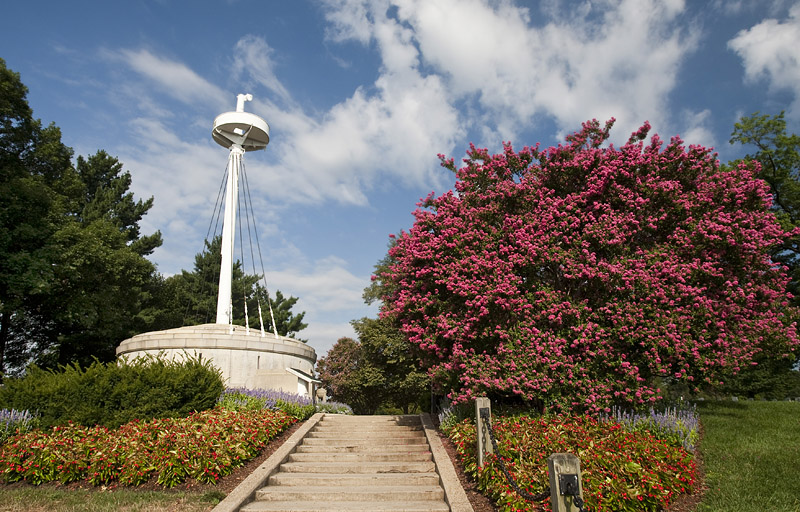
The entrance to the Naval section of Arlington National Cemetery.

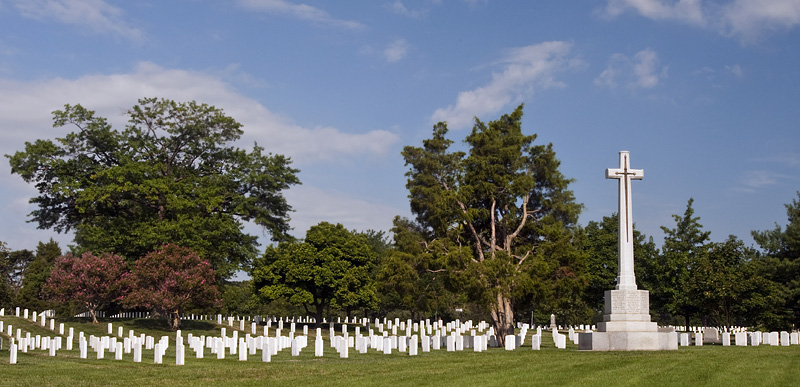
The cross on the right (below) is the Canadian Cross of Sacrifice and honours U.S. citizens who fought and died while serving in the Canadian Armed Forces during the First, Second and Korean Wars. The Cross of Sacrifice was suggested by Prime Minister Mackenzie King in 1925 and approved by President Calvin Coolidge June 12, 1925. The cross was dedicated in Arlington National Cemetery on Armistice Day 1927 (November 11th).


Its hard to capture a shot that shows how large the cemetery is, but I've tried to do so with the first two images.
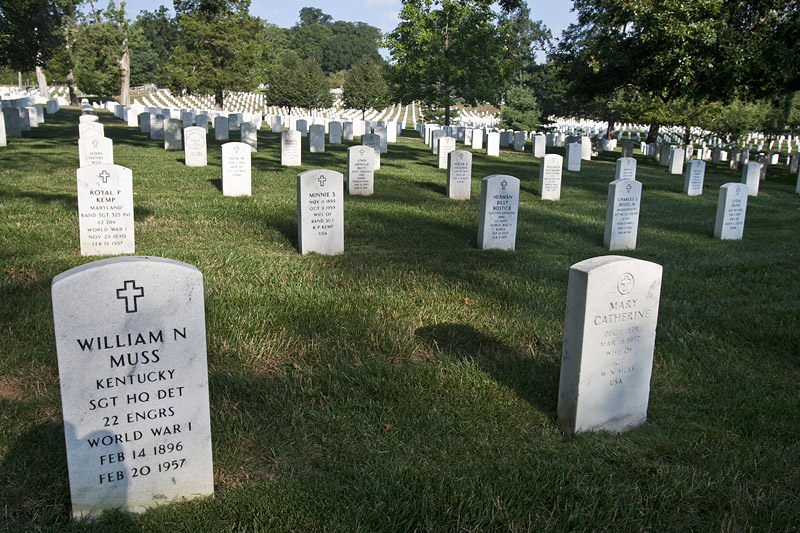

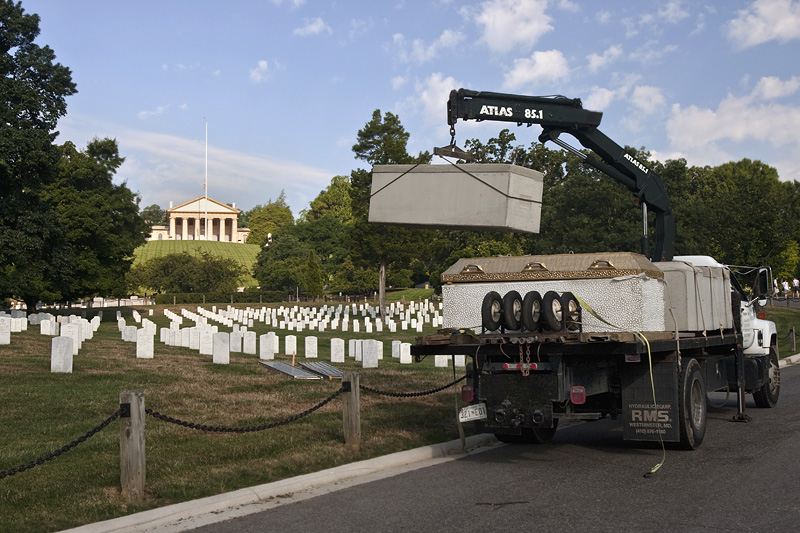
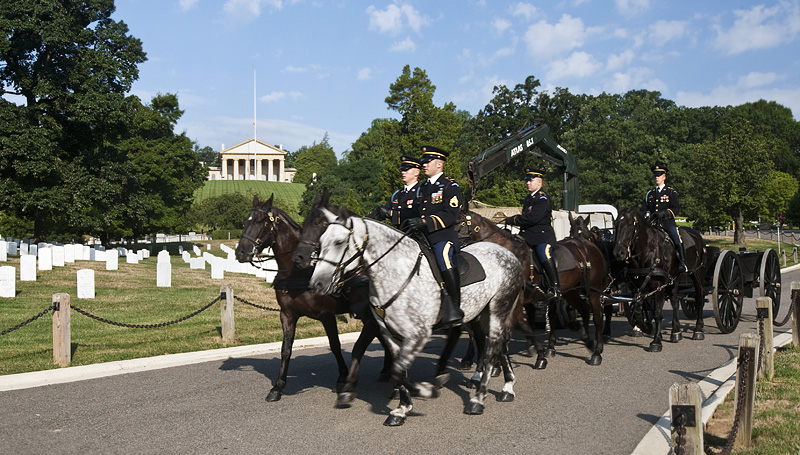
The entrance to the Naval section of Arlington National Cemetery.
The cross on the right (below) is the Canadian Cross of Sacrifice and honours U.S. citizens who fought and died while serving in the Canadian Armed Forces during the First, Second and Korean Wars. The Cross of Sacrifice was suggested by Prime Minister Mackenzie King in 1925 and approved by President Calvin Coolidge June 12, 1925. The cross was dedicated in Arlington National Cemetery on Armistice Day 1927 (November 11th).

The next post will finish up in Arlington Cemetery with a look at the Tomb of the Unknown Soldier and the changing of the guard ceremony that has carried on uninterrupted 24/7/365 for many years.
Thursday, October 14, 2010
Arlington National Cemetery
Arlington National Cemetery is a 624 acre military cemetery established during the American Civil War on the grounds of the Arlington House which was the former estate of Mary Anna Lee (wife of Confederate General Robert E. Lee and the great grand daughter of George Washington). The cemetery is located on the west side of the Potomac River across from the Lincoln Memorial. There is much to photograph at the cemetery (i.e., famous grave sites, the Tomb of the Unknown Soldier, changing of the guard) and I'll post some of these over the next few days.
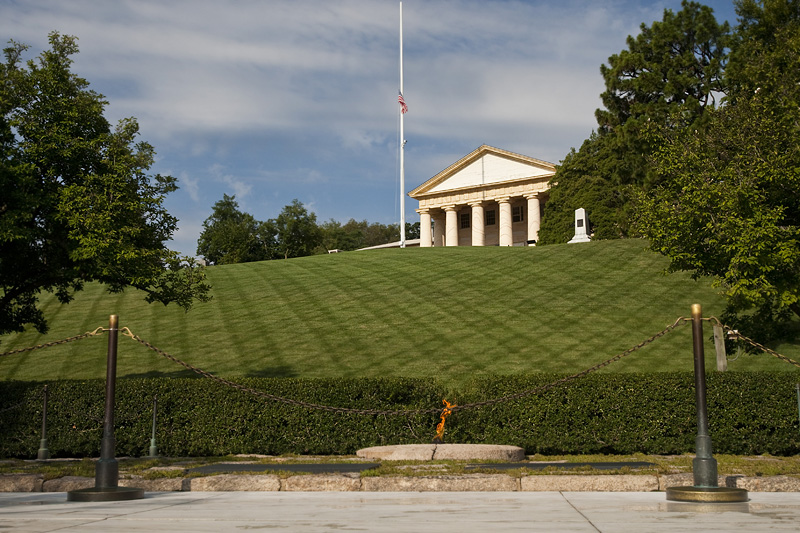
Below are the grave sites of John F. Kennedy, the 35th US President, assassinated November 22, 1963 and his brother, Robert "Bobby" F. Kennedy, assassinated June 6, 1968.


And perhaps JFK's most famous quote, from his inaugural address on January 20, 1961. (this image was taken looking into the sun, which doesn't make for a fine image, however the the message portrayed is a powerful one evoking an emotional response as most people have seen enough clips of the inaugural address that you can see and hear Kennedy reciting the quote as you read it).

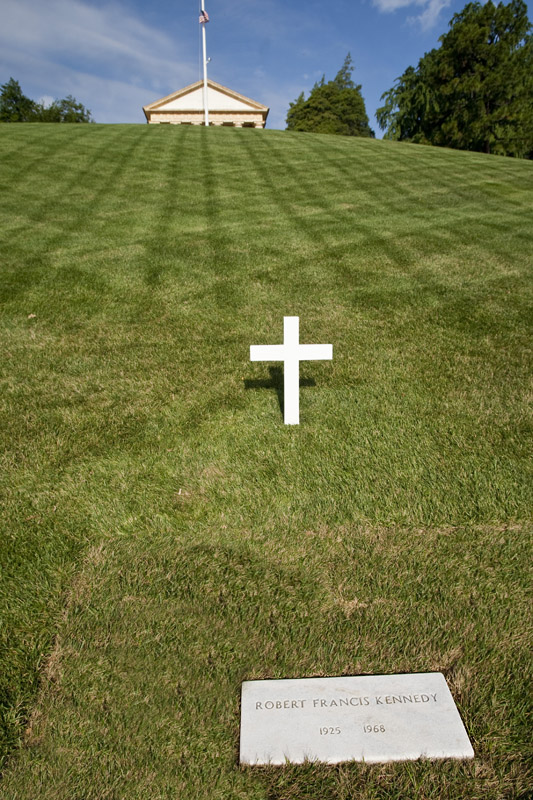
Bobby Kennedy's grave is a simple white marble headstone and cross located alone about fifty feet south of his brother's grave site.


Below are the grave sites of John F. Kennedy, the 35th US President, assassinated November 22, 1963 and his brother, Robert "Bobby" F. Kennedy, assassinated June 6, 1968.

And perhaps JFK's most famous quote, from his inaugural address on January 20, 1961. (this image was taken looking into the sun, which doesn't make for a fine image, however the the message portrayed is a powerful one evoking an emotional response as most people have seen enough clips of the inaugural address that you can see and hear Kennedy reciting the quote as you read it).

Bobby Kennedy's grave is a simple white marble headstone and cross located alone about fifty feet south of his brother's grave site.

Tuesday, September 28, 2010
The Capitol Building, Washington DC
The Capitol is arguably the most impressive structure on the National Mall and is a photographers dream to shoot.....especially with nice light and no too many people around. The Capitol was designed by William Thornton a physician and amateur architect who won a design competition for the project in 1793. He envisioned a three part structure with a central rotunda flanked by two pavilions, one for the House of Representatives & the other for the Senate. The cornerstone was laid November 18, 1793 by George Washington and the Senate pavilion was completed in 1800 followed by the House of Representatives pavilion in 1807. Over the years there have been four major renovations of the Capitol (largely to increase its size), with the most recent revision completed in 1960. In 1859 the length of the Capitol building was more than doubled from 352' to 746' which made the original dome proportionally too small and so a much larger dome was installed in 1863. This dome remains in place today and represents one of the biggest engineering feats of the 19th century. The dome is made up of two shells (inner & outer) weighing over nine million pounds and constructed of cast iron (painted on the exterior to look like white marble). Although cast iron has a specific gravity three times that of marble, using cast iron to construct the dome resulted in a stronger, lighter and more flexible dome than had marble been used. The Capitol dome expands and contracts about 4" in diameter due to temperature fluctuations. The great rotunda of the Capitol, created by the dome, is just over 95' in diameter and rises 183' from the floor.
The views of the Capitol shown below are of the western facade of the building, the Senate pavilion is on the left and the House of Representatives on the right. Notice the flags flying above the two pavilions signifying that both the House and Senate were sitting when these shots were taken.


And the Capitol is just as pretty at night :) The first three night shots were taken using Lee 4x6" ND grads (one & three stop hard edge filters) and the first image also had a CPL. All of these shots were taken from about the same position, using three different lenses (16-35, 24-105 & 70-200/2.8 IS).


The views of the Capitol shown below are of the western facade of the building, the Senate pavilion is on the left and the House of Representatives on the right. Notice the flags flying above the two pavilions signifying that both the House and Senate were sitting when these shots were taken.


And the Capitol is just as pretty at night :) The first three night shots were taken using Lee 4x6" ND grads (one & three stop hard edge filters) and the first image also had a CPL. All of these shots were taken from about the same position, using three different lenses (16-35, 24-105 & 70-200/2.8 IS).


Tuesday, September 21, 2010
Thomas Jefferson Memorial, Washington DC
The Jefferson Memorial is located at the edge of the Potomac River Tidal Basin and is directly south of the White House. The Jefferson Memorial and the White House form the north south axis of the National Mall, while the Lincoln Memorial and the Capitol Building form the east west axis. The Washington Monument was supposed to to be located at the intersection of the axes, however boggy ground necessitated its construction some 350 feet to the east. The Jefferson Memorial was dedicated on Jefferson's 200th birthday, April 13, 1943 by President Roosevelt and is now ranked fourth on the list of America's favourite architecture (after the Empire State Building, The White House and the Washington Cathedral). The neoclassical design of the memorial resembles a mini Pantheon with a shallow domed rotunda entered through a portico, all supported by iconic Greek columns. The 19' bronze statue of Jefferson was not added to the memorial until 1947 due to the interruption of its construction by WWII. The walls of the rotunda contain excerpts of four of his famous speeches, one of which is shown below and I've tried to compose the image to make it appear as if Jefferson is reading the words inscribed into the white marble walls.
The Memorial taken from across the tidal basin.

The main entrance through the portico.

A side view of the rotunda with Jefferson in the middle.

Jefferson reading one of his speeches :)

Not sure if I like the processing of this shot, but nevertheless it is a profile of Thomas Jefferson.

Classic Greek Columns.

And finally a pano crop of a 16mm shot of the Washington and Jefferson Monuments taken from across the Tidal Basin (Near the FDR Memorial).

The Memorial taken from across the tidal basin.

The main entrance through the portico.

A side view of the rotunda with Jefferson in the middle.

Jefferson reading one of his speeches :)

Not sure if I like the processing of this shot, but nevertheless it is a profile of Thomas Jefferson.

Classic Greek Columns.

And finally a pano crop of a 16mm shot of the Washington and Jefferson Monuments taken from across the Tidal Basin (Near the FDR Memorial).

Subscribe to:
Comments (Atom)