Tuesday, September 28, 2010

The Capitol Building, Washington DC

The Capitol is arguably the most impressive structure on the National Mall and is a photographers dream to shoot.....especially with nice light and no too many people around. The Capitol was designed by William Thornton a physician and amateur architect who won a design competition for the project in 1793.  He envisioned a three part structure with a central rotunda flanked by two pavilions, one for the House of Representatives & the other for the Senate.  The cornerstone was laid November 18, 1793 by George Washington and the Senate pavilion was completed in 1800 followed by the House of Representatives pavilion in 1807.  Over the years there have been four major renovations of the Capitol (largely to increase its size), with the most recent revision completed in 1960.  In 1859 the length of the Capitol building was more than doubled from 352' to 746' which made the original dome proportionally too small and so a much larger dome was installed in 1863. This dome remains in place today and represents one of the biggest engineering feats of the 19th century.  The dome is made up of two shells (inner & outer) weighing over nine million pounds and constructed of cast iron (painted on the exterior to look like white marble).  Although cast iron has a specific gravity three times that of marble, using cast iron to construct the dome resulted in a stronger, lighter and more flexible dome than had marble been used. The Capitol dome expands and contracts about 4" in diameter due to temperature fluctuations.  The great rotunda of the Capitol, created by the dome, is just over 95' in diameter and rises 183' from the floor.

The views of the Capitol shown below are of the western facade of the building, the Senate pavilion is on the left and the House of Representatives on the right.  Notice the flags flying above the two pavilions signifying that both the House and Senate were sitting when these shots were taken.


And the Capitol is just as pretty at night :)  The first three night shots were taken using Lee 4x6" ND grads (one & three stop hard edge filters) and the first image also had a CPL.  All of these shots were taken from about the same position, using three different lenses (16-35, 24-105 & 70-200/2.8 IS).


Tuesday, September 21, 2010

Thomas Jefferson Memorial, Washington DC

The Jefferson Memorial is located at the edge of the Potomac River Tidal Basin and is directly south of the White House.  The Jefferson Memorial and the White House form the north south axis of the National Mall, while the Lincoln Memorial and the Capitol Building form the east west axis.  The Washington Monument was supposed to to be located at the intersection of the axes, however boggy ground necessitated its construction some 350 feet to the east.  The Jefferson Memorial was dedicated on Jefferson's 200th birthday, April 13, 1943 by President Roosevelt and is now ranked fourth on the list of America's favourite architecture (after the Empire State Building, The White House and the Washington Cathedral). The neoclassical design of the memorial resembles a mini Pantheon with a shallow domed rotunda entered through a portico, all supported by iconic Greek columns.  The 19' bronze statue of Jefferson was not added to the memorial until 1947 due to the interruption of its construction by WWII.  The walls of the rotunda contain excerpts of four of his famous speeches, one of which is shown below and I've tried to compose the image to make it appear as if Jefferson is reading the words inscribed into the white marble walls.

The Memorial taken from across the tidal basin.

The main entrance through the portico.

A side view of the rotunda with Jefferson in the middle.


Jefferson reading one of his speeches :)


Not sure if I like the processing of this shot, but nevertheless it is a profile of Thomas Jefferson.


Classic Greek Columns.


And finally a pano crop of a 16mm shot of the Washington and Jefferson Monuments taken from across the Tidal Basin (Near the FDR Memorial).

Monday, September 20, 2010

National World War II Memorial, Washington DC

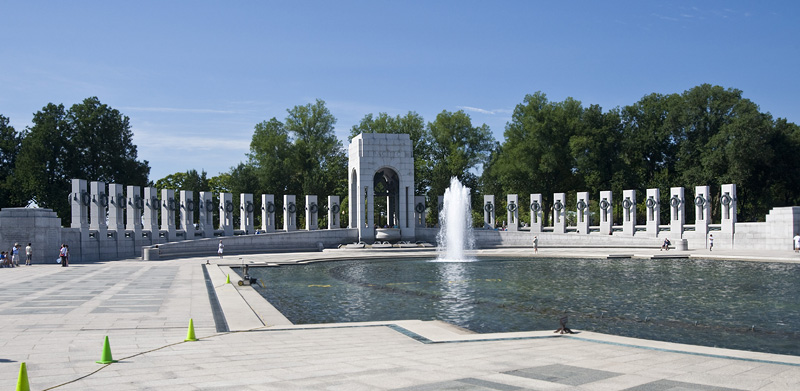
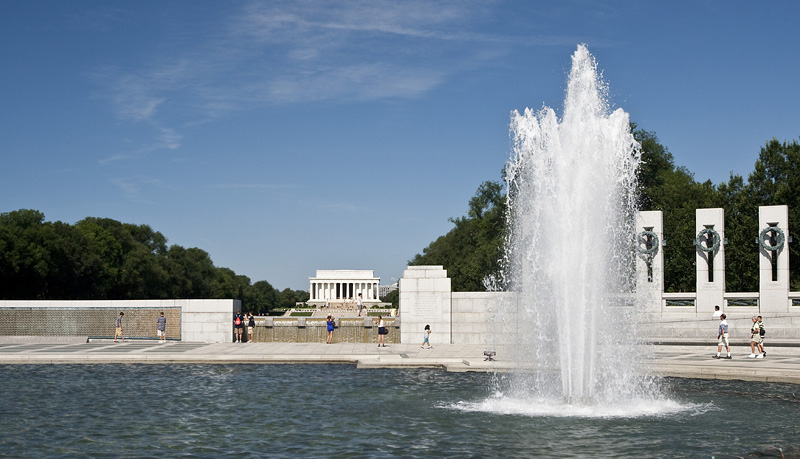
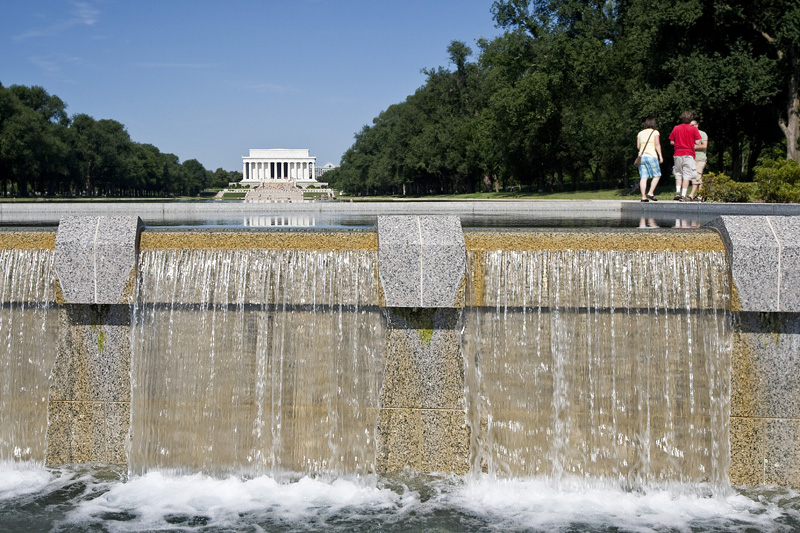
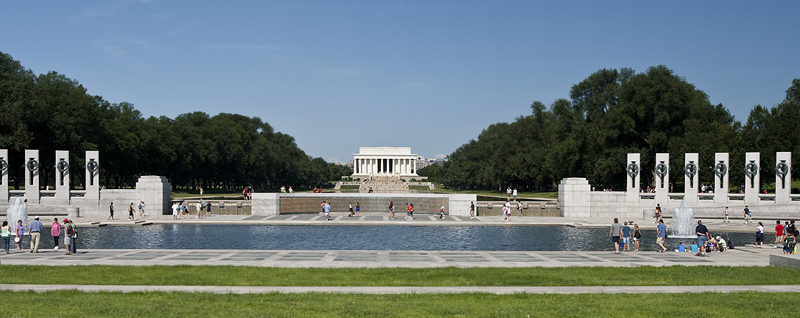
The WWII Memorial honours the sixteen million who served in the armed forces of the United States during World War II, and especially the more than 400,000 who died fighting in the twentieth century's greatest conflict.  It is located at the eastern end of the reflecting pool just west of the Washington Monument.  One of the newest monuments in Washington, it was dedicated by President George Bush on May 29, 2004.  The monument sits on 7.4 acres of land and consists of two semi-circles surrounding a large pool and fountain which is about six feet below grade.  Each semi-circle is made up of a central arch 43' high (one representing the Pacific theater, the other the Atlantic theater) flanked by twenty eight granite pillars 17' in height and representing the American states, districts, territories and other land holdings in 1945. Along the western side of the memorial is Freedom Wall which contains 4,048 gold stars, each representing one hundred people who paid the ultimate price protecting freedom during the war.  The Memorial is open 24 hours a day, every day of the year and approximately 4.4 million people visit annually.


The Pacific side


The Atlantic side


Looking west towards the Lincoln Memorial.  Freedom wall is on the left of this image.


Thursday, September 16, 2010

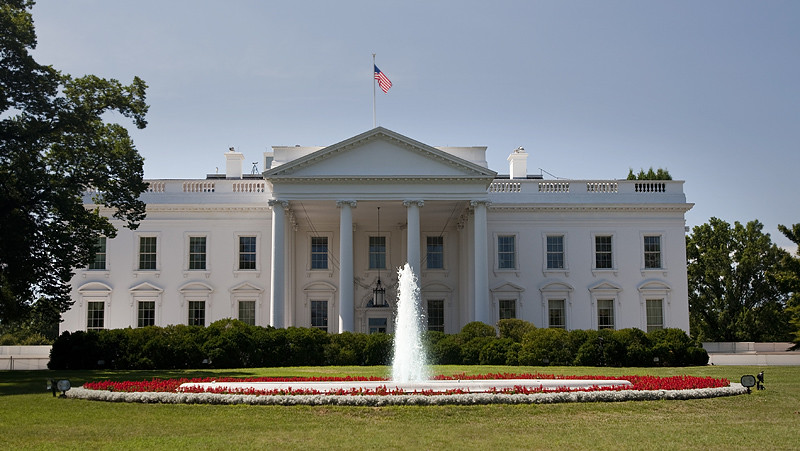
The Washington Memorial and the White House

The Washington Monument was completed in 1884 in honour of America's first President. At the time of its completion it was the tallest structure of any kind in the world at 555'5" and it remains the tallest masonry structure in the world. It was patterned after the ancient Egyptian Obelisks although it is ten times the size of them. It follows the exact proportions of an obelisk with the height equaling ten times the size of the base.

Although completed in 1884, construction began in 1848 however problems with the society that oversaw the construction and the ensuing civil war stopped construction of the memorial for a number of years at 156'. If you closely at the shot below you can see the line & colour change of the blocks at the 156' mark.

The monument was supposed to be built in the centre of the National Mall where the north/south axis of the mall crossed the east/west axis however the ground there was too boggy to support the structure necessitating its location to be moved some 350' from the axis intersection.

The size & shape of the monument makes it difficult to photograph well but I trust you enjoy these shots anyway.


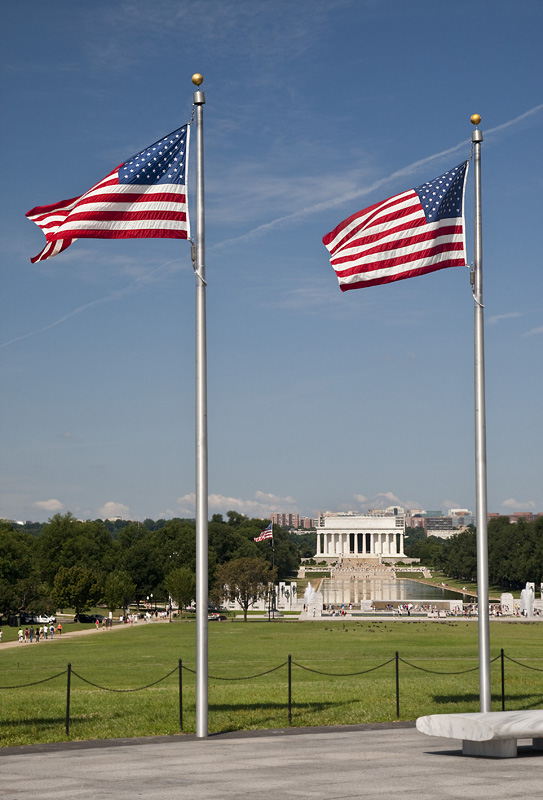
Two of the many flags around the base of the Washington used to frame the Lincoln Monument about one mile to the west (across the WWII Memorial and reflecting pool).


Saturday, September 11, 2010

Vietnam Veterans Memorial

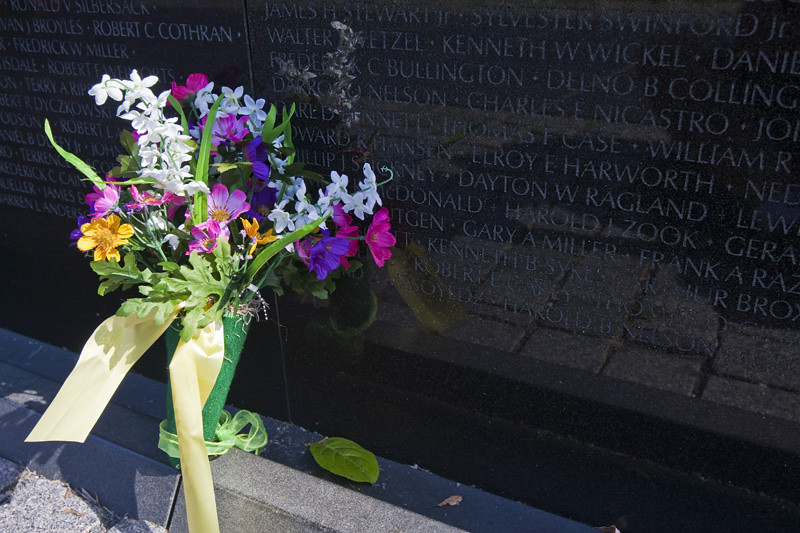
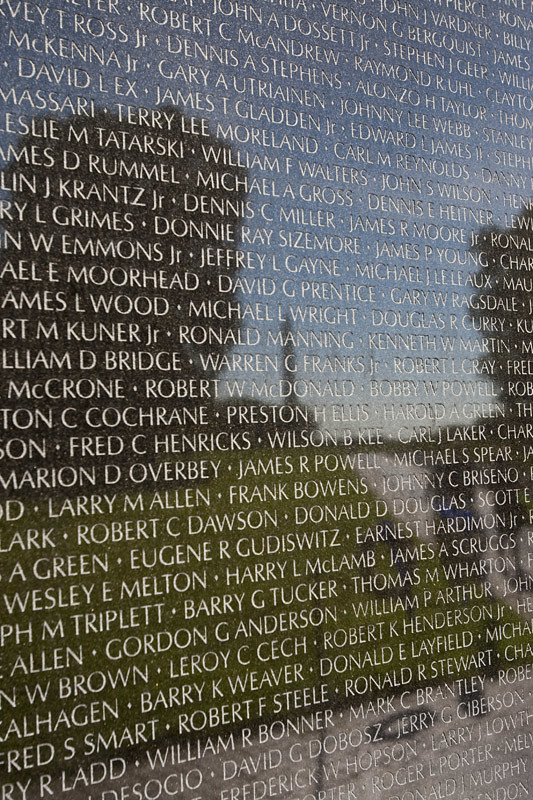
The Vietnam Veterans Memorial is the most visited Memorial on the National Mall and also one of the most emotionally moving. The Memorial is the most unique on the Mall, a V-shaped wall of black polished marble cut into the side of a swale and containing the names of 58,267 men & women killed or missing in action during the Vietnam War.  One side of the V points toward the Lincoln Memorial while the other points toward the Washington Monument.  The Vietnam Memorial was built entirely with private funds (nine million dollars) and was dedicated on November 11, 1984.

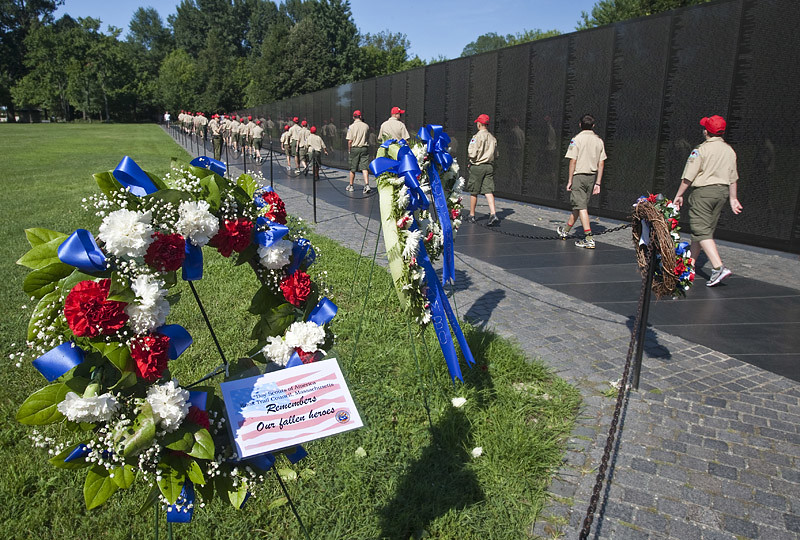
Walking along the Memorial is a very silent and somber experience, with many people stopping to leave a flower bouquet or making a paper & pencil tracing of a lost loved one's name from the Memorial wall.  Reflecting the mood of the Memorial photographically is next to impossible, however I hope the images that follow do it justice.  The day Deb & I were there in August a Boy Scout Troop was visiting the Memorial and it was a privilege to photography them as then slowly moved through the Memorial in single file, completely silent, many of them holding their hats in front of their hearts.


This next image is becoming one of my all time favourites.


And finally a reflection of the Washington Monument though the names on the Wall.

Thursday, September 9, 2010

Lincoln Memorial

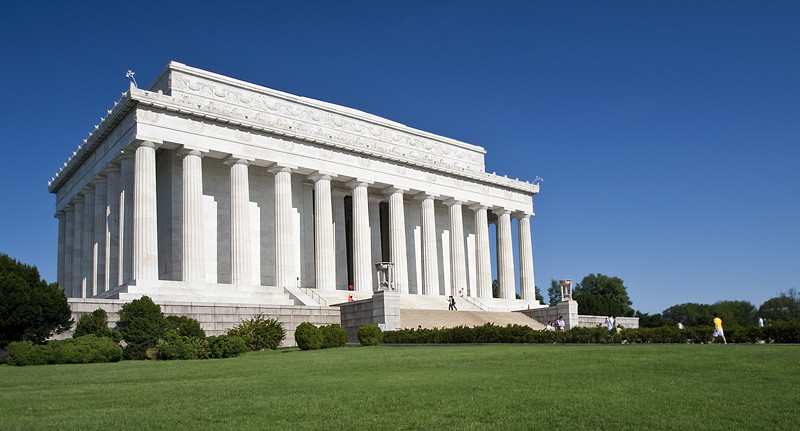
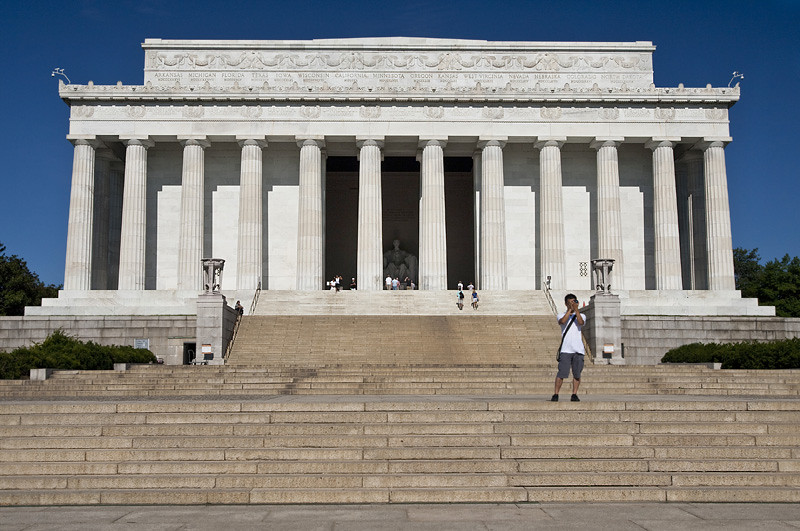
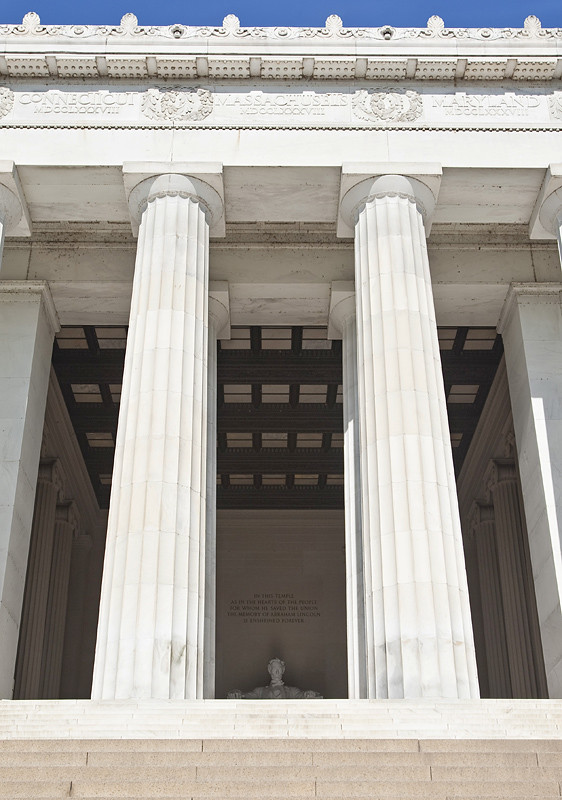
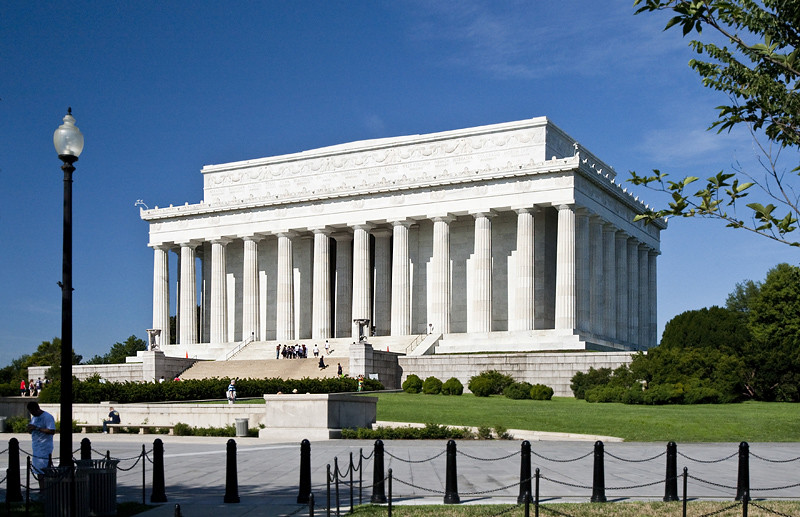
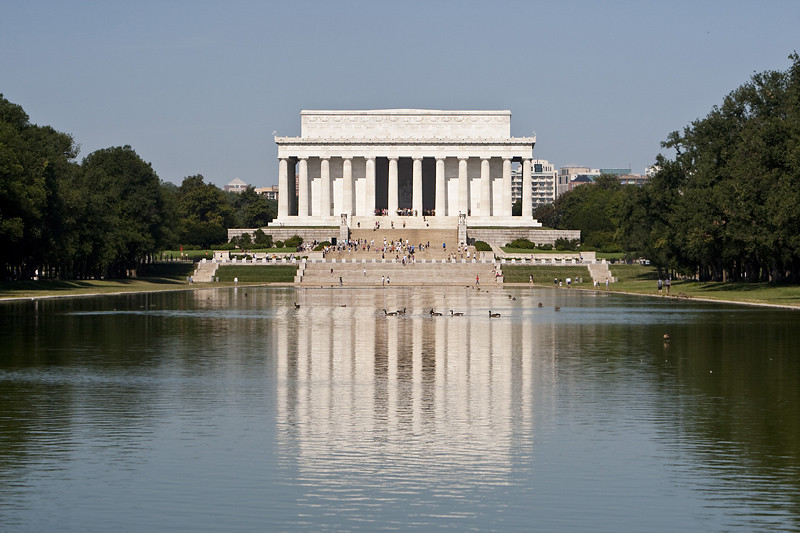
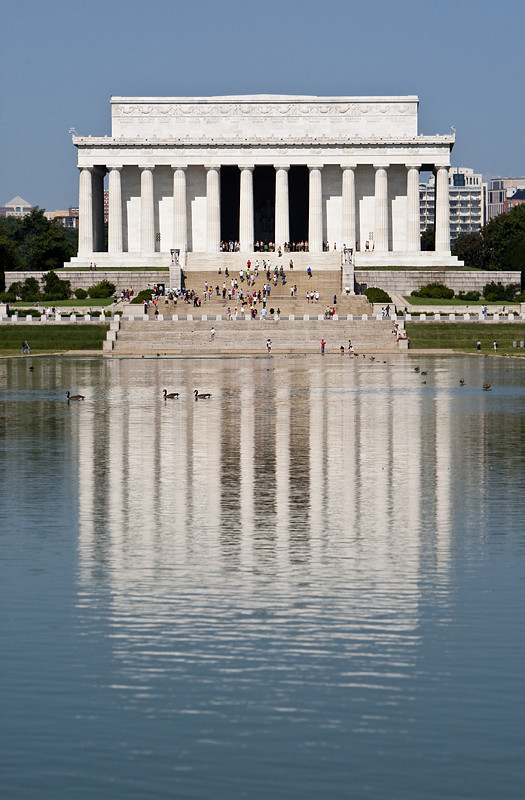
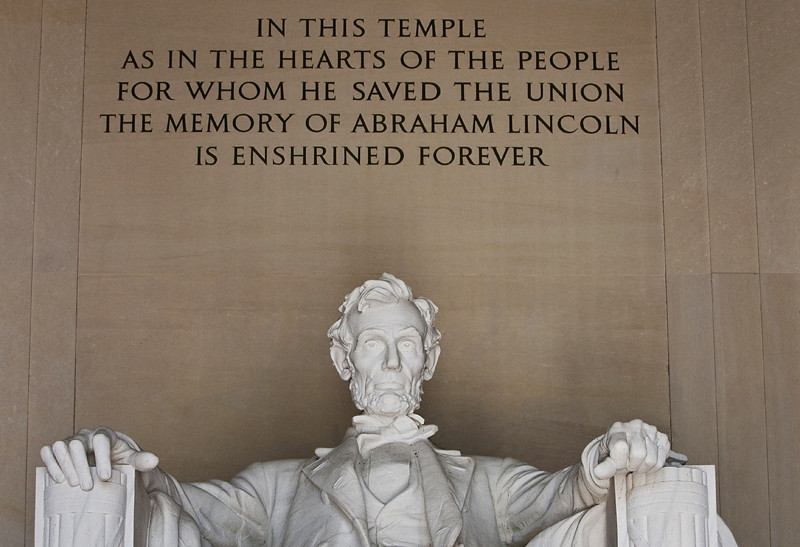
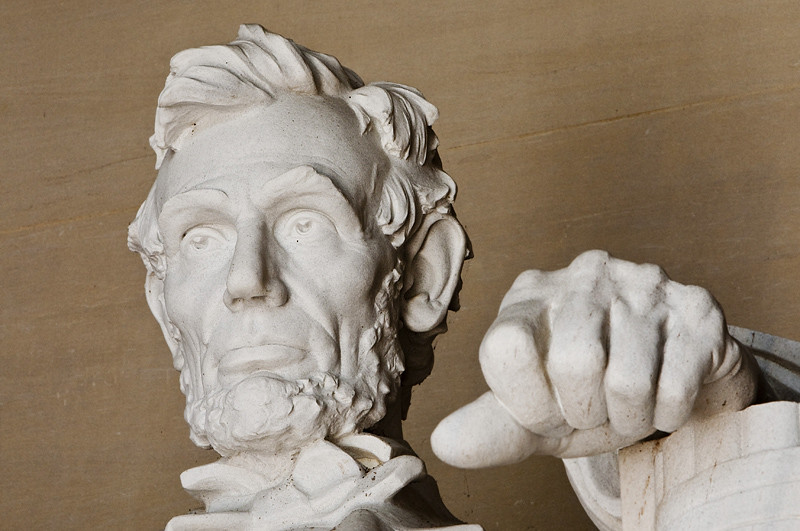
The Lincoln Memorial is at the western end of the National Mall in Washington DC (the Capitol Building marks the eastern end of the mall about two miles away).  The Lincoln Memorial was completed in 1922 and is a type of Greek Doric Temple that houses a 19' high marble statue of Abraham Lincoln, the 16th American President.  The Memorial is one of the most recognized American icons, featured on both the five dollar bill and one cent coin.  The temple has 36 columns representing the number of states in the union at the time of Lincoln's assassination and the 48 states existing at the time of the Memorial's completion in 1922 are carved around the attic of the structure (a plaque recognizing Alaska & Hawaii is embedded in the patio floor near the base of the steps leading into the Memorial).  The words of Lincoln's Gettysburg address are carved in the marble walls of the interior of the Memorial along with the text of his second inaugural address.

Early morning light is best for photographing the Memorial and is also a time when not too many people are around.  Being one of the most photographed Memorials in the states it is impossible to be original but I've tried to post some less common views.

When shooting cityscapes & landscapes, I use a Kata backpack to hold the gear which includes three lenses (16-35, 24-105 & 70-200/2.8), flash, CPL, 4X6 ND grads, two cameras and other odds and ends.  All three lenses, CPL & ND grads were used taking these shots of the Memorial.  Although it was over 100°F carrying enough equipment is the only way to get the right shots.....or in my case try to get the right shots :)


Wednesday, September 8, 2010

Red Tailed Hawk

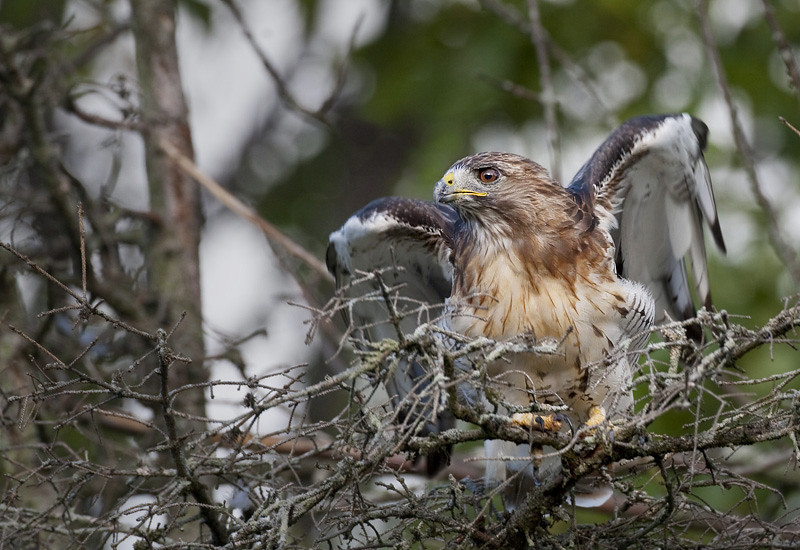
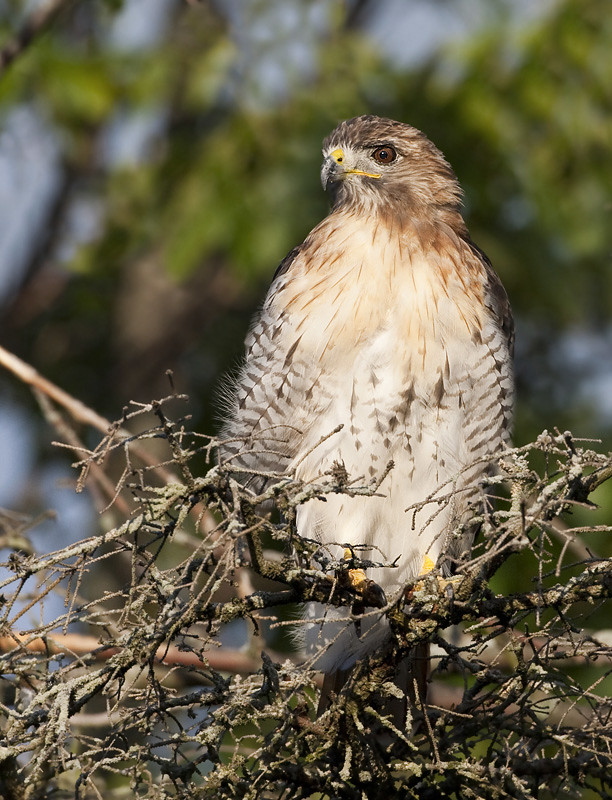
Deb & I visited Presqu'ile Provincial Park in Brighton, Ontario late Sunday afternoon and found this adult Red Tailed Hawk.  We watched this large raptor for about twenty minutes and as he'd just captured a meal he let us get quite close.  Although we took a lot of shots, these two show completely different looks of the same bird, because of the poses and the lighting.  The first is taken in 'open shade' meaning bright enough to take a shot however no direct sunlight.  Open shade allows for the feather detail to be well illustrated and also allows for subtle colour hues to be seen.  The second is taken in direct sunlight, which in this case is OK as it was just before sunset so there are no harsh shadows and the evening light has a 'warmth' or reddish cast which is generally appealing. The sunlight also adds a nice catch light in the eyes.  When shooting in direct sunlight it is always best to work in the first two hours after sunrise and then again in the last two hours before sunset.


Monday, September 6, 2010

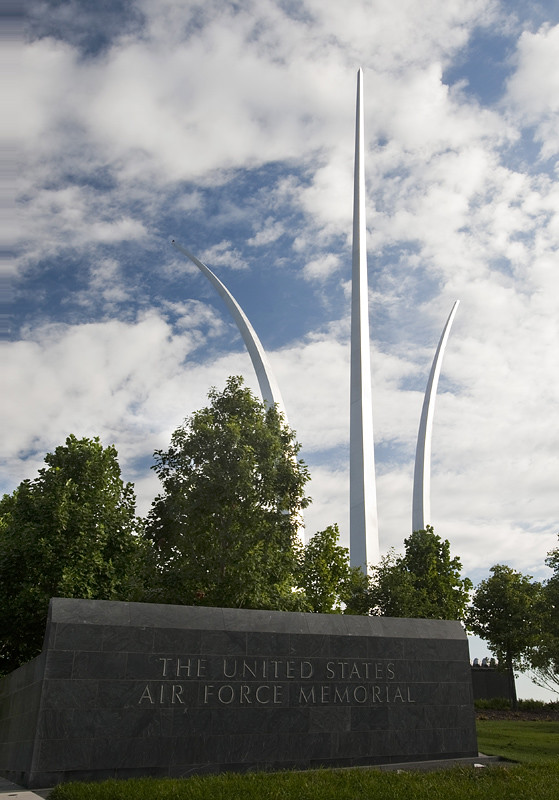
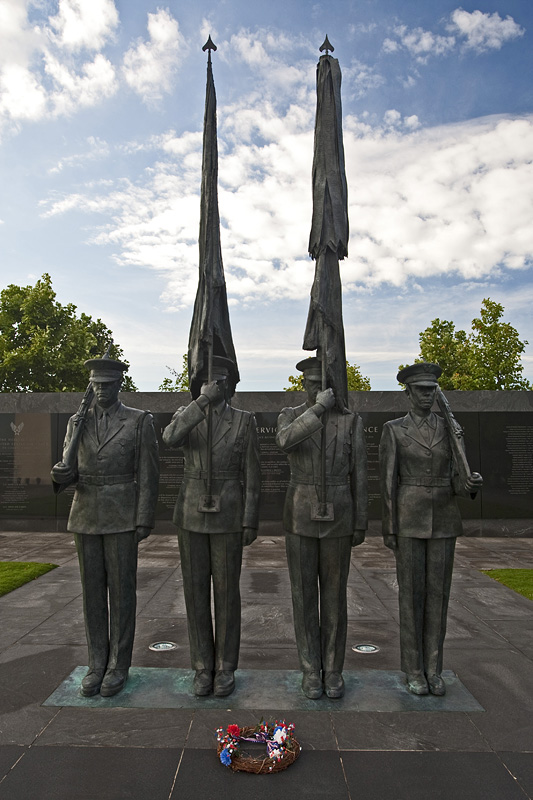
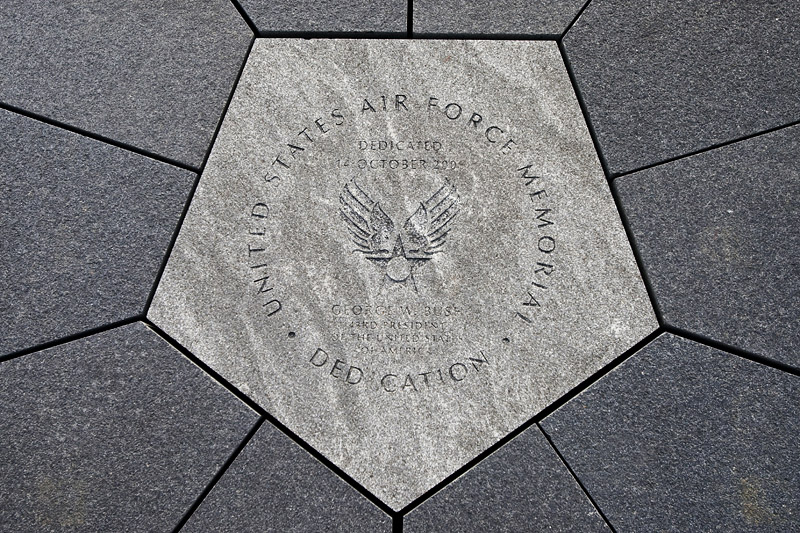
U. S. Air Force Memorial, Arlington VA

The Air Force Memorial is located just north of the Pentagon in Arlington Virginia and is one of the newest memorials in the Washington DC area, dedicated by George Bush on October 14, 2006. 

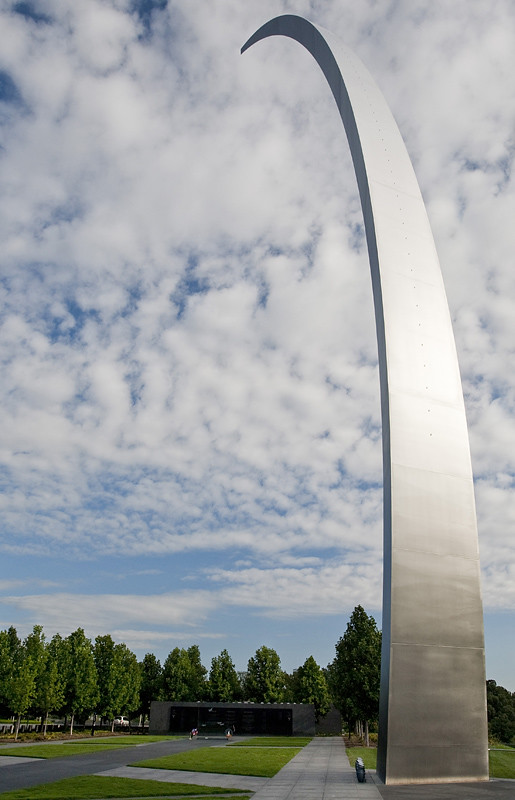
The Memorial is 270 feet high and consists of three soaring arcs that evoke an image of jet flighters. The arcs also represent the USAF's three core values: "Integrity first, Service before self, and Excellence in all we do". The spires are asymmetrical, and each is a different height so that the view of the Memorial changes from every angle.


Wednesday, September 1, 2010

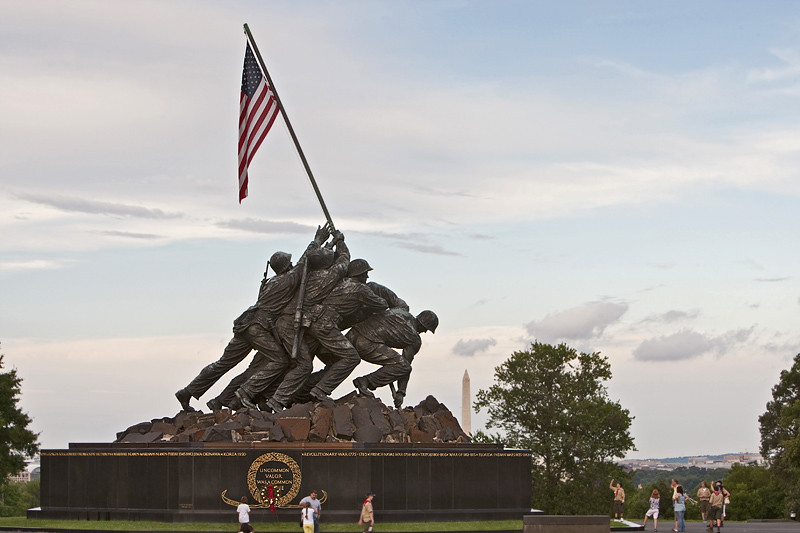
U.S. Marine War Memorial, Arlington Virginia

At the end of July Deb & I spent some time in Washington DC and Arlington Virginia checking out the many historical sites and trying to take some photographs of them.  This was a challenge arranging travel plans to spend the golden hours (the two hours after sunrise and two hours before sunset) at the right places to get the best shots possible.  It was nice not lugging the longer lenses around for a change!  While in the DC area I used a three lens kit (16-35/2.8, 24-105/4 and 70-200/2.8) with the 16-35 being the lens of choice most of the time. A circular polarizing filter was used for every outside shot and 4X6 ND grad filters were used extensively as well.

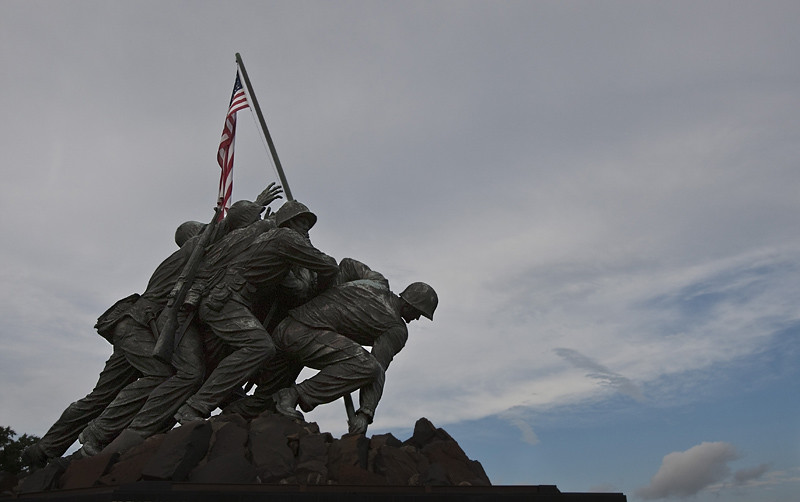
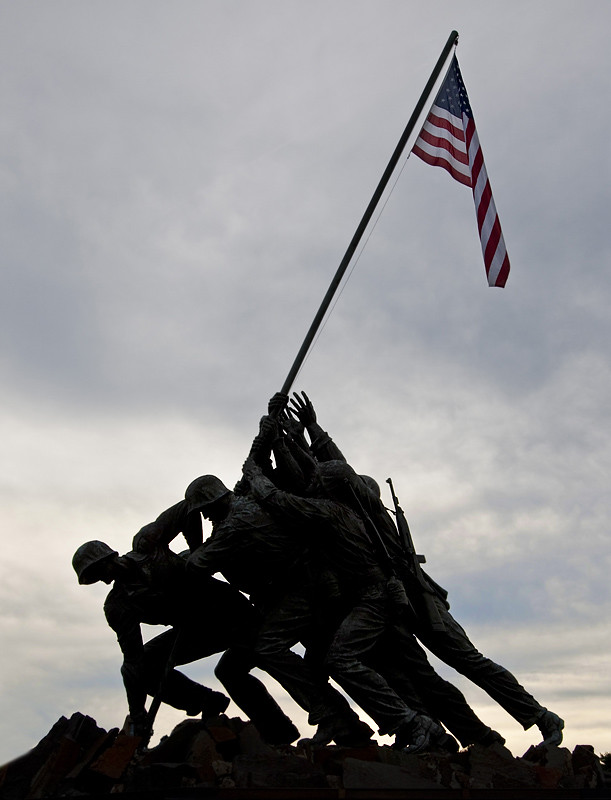
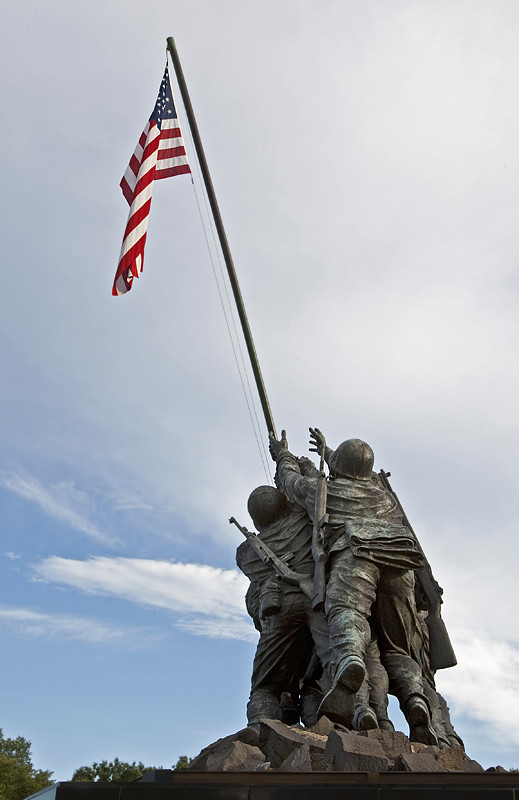
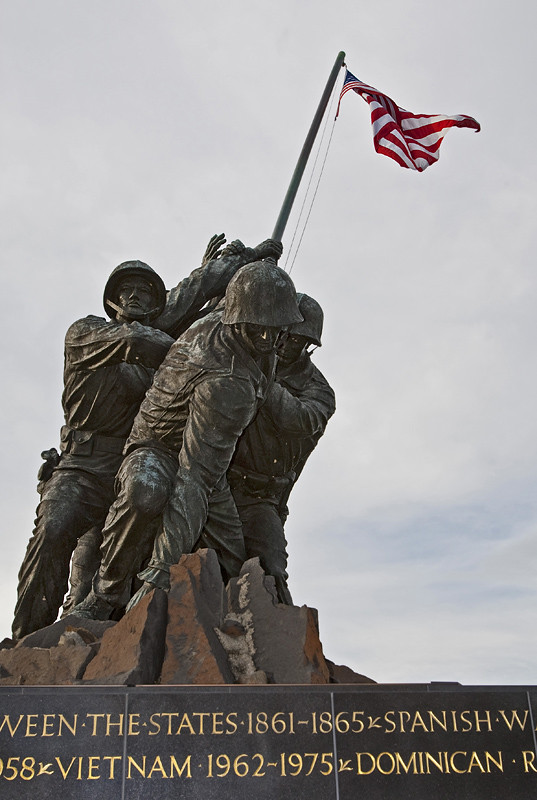
The first monument we visited was the U.S. Marine War Memorial in Arlington Virginia and a few images are posted below.

This memorial was dedicated by Dwight Eisenhower in 1954 and is the largest cast bronze statue in the world. The six figures in the statue are 32' high and the flag pole is 60'. The memorial honours U.S. Marines who have perished in battle since 1775. The statue is a reproduction of the famous photo taken by Joe Rosenthal of five Marines & a Navy Corpsman raising the American Flag at Iwo Jima. The battle at Iwo Jima cost 6,821 Americans their lives and 5,931 of the casualties were Marines (this accounted for almost one third of all the Marine casualties during WWII).
The memorial is located immediately north of Arlington National Cemetary in Arlington VA.


And this last image is my favourite because of the lone veteran saluting in front of the memorial.  Compositionally not the best shot but the human element makes a powerful statement.